

Why Most Designers Start in the Wrong Place
A client recently told me: "I love how it looks, but I don't love being here."
That's the gap most designers miss. They design for Pinterest, not for people.
Here's what I do differently: I don't start with style. I start with a question that changes everything.
The Question That Separates My Approach
Before we discuss colours, or furniture, I ask: "How do you want to FEEL when you walk through your door?"
But here's what makes my process different: I don't just ask it and move on. I build the entire design around your answer.
If you say "cocooned," I'm immediately thinking:
Acoustic materials that absorb sound and create quiet
Warm textures that invite touch
Layered lighting that shifts from functional to calming
Spatial planning that creates intimate zones, not open voids
If you say "energized," I'm designing for:
Strategic natural light to regulate your circadian rhythm
Colour psychology that activates without overwhelming
Spatial flow that keeps you moving and thinking clearly
Materials that feel clean and purposeful
If you say "restored," I'm prioritizing:
Sensory control—managing sound, scent, and visual complexity
Grounding elements like natural materials and organic forms
Lighting flexibility so your space adapts to your energy level
Minimal friction—everything you need is exactly where you need it
Most designers ask about feeling, then design based on style trends anyway. I reverse it. Style serves feeling, not the other way around.
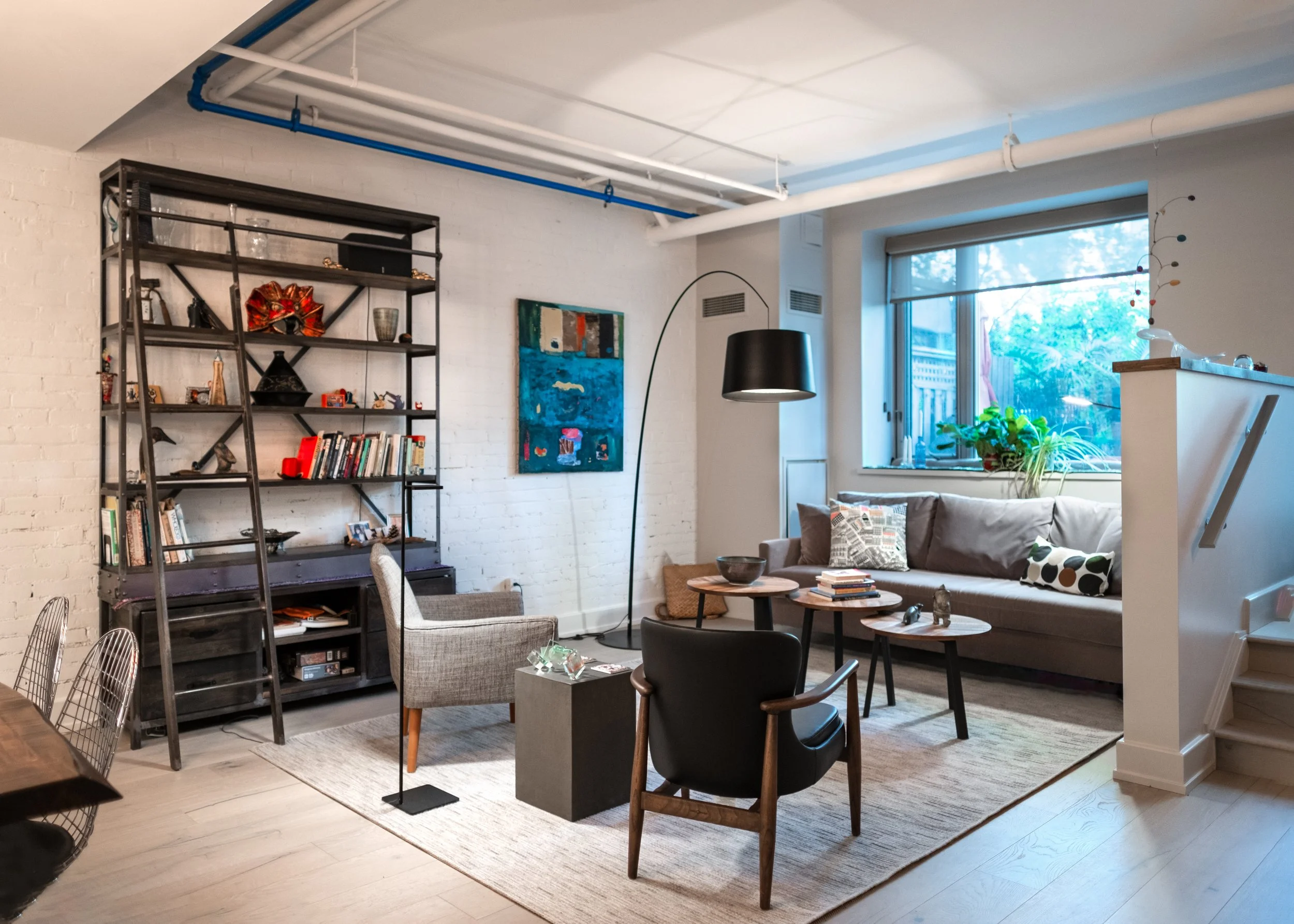
Interior Design Services, My client loves the feeling of his new living room
Why This Matters for Executives
This approach is especially critical for professionals who live and work everywhere. When "home" isn't tied to one location, FEELING becomes everything.
Your Toronto condo, your temporary workspace, your cottage retreat, they all need to do the same thing for you: restore you after high-pressure days, energize you when you need focus, or cocoon you when the world has demanded too much.
That's why Virtual Design also works so well for executives. Feeling isn't location-dependent. It's intentional. And I can design for how you need to feel no matter where you are.
From Feeling to Function
Here's what this looks like in practice:
A client once told me she needed her home office to feel "like a think tank—smart, but not cold." That single phrase told me:
Warm wood tones (smart, grounded)
Task lighting with dimming capability (functional, adaptable)
Acoustic panels disguised as art (intelligent sound control)
A layout that separated "thinking space" from "doing space"
Another client said his living room needed to feel "like a members club, exclusive, but not showy." Translation:
Rich textures (leather, velvet, warm metals)
Intimate furniture groupings
Lighting that creates pools of warmth, not even brightness
No flashy statement pieces, everything earned its place
This is the work. Translating your instinct into design strategy.
Interior Design that Delivers
On December 16 at 12:30 PM ET, I'm going LIVE to walk through exactly how I translate feeling into the 10 design elements that make spaces actually work—not just look good.
60 executives have already registered. If you've ever walked into a beautiful space that still felt "off," this session is for you.
We'll cover:
Why "feeling" is the most strategic decision you can make
The 10 elements I prioritize that most designers overlook
How to know if your current space is working for you—or against you
Can't make it live? Register anyway, everyone gets the replay.
This is for professionals who know their home should be working harder for them. If that's you, I'll see you there.
Barbara Nyke
Interior Designer
